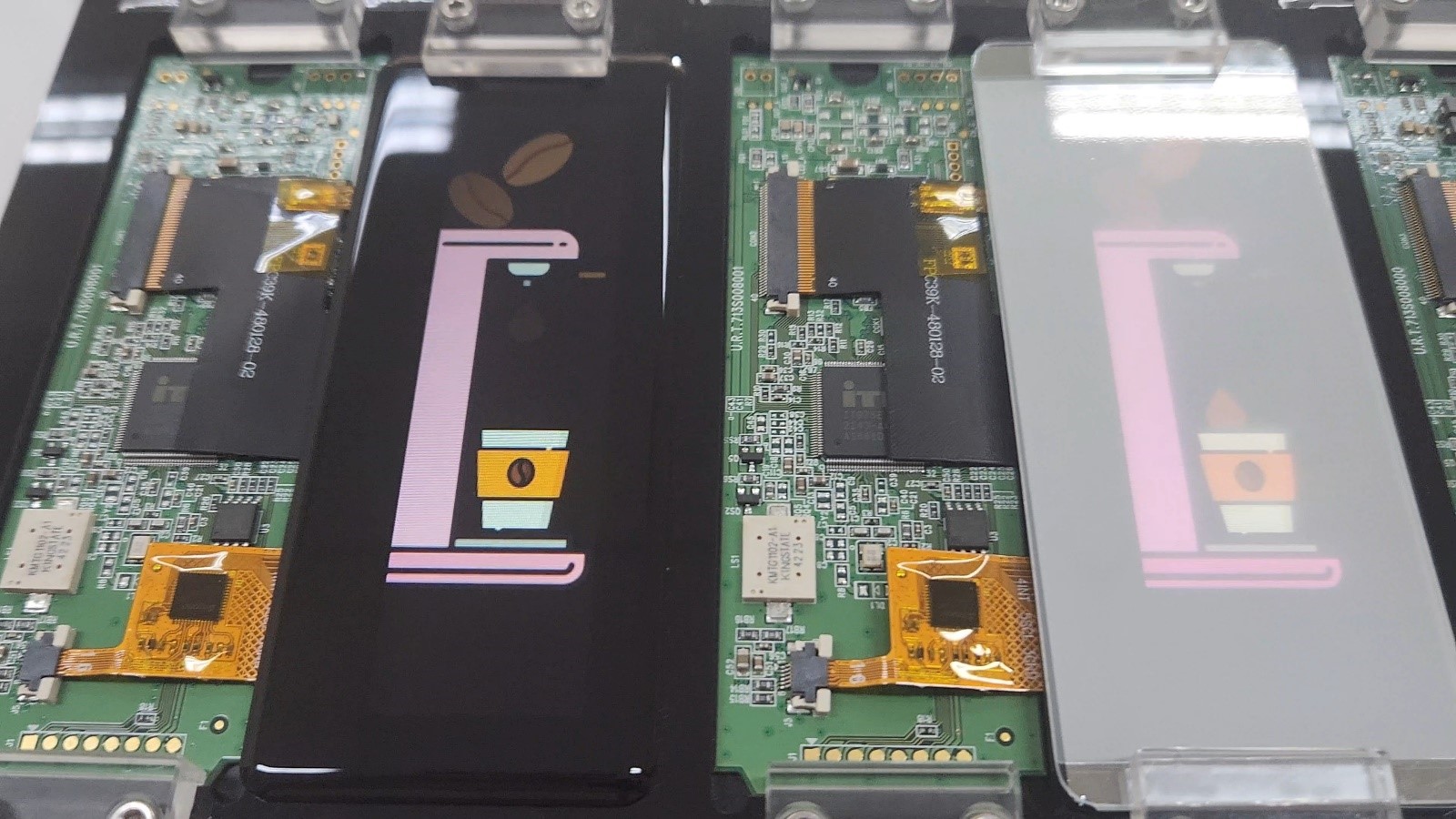
Technical Introduction of 2.5D Cover Glass Processing
1. Background of 2.5D Cover Glass
With the growing demand for refined appearance and smooth touch interaction, 2.5D cover glass has gradually replaced traditional flat glass. Its chamfered and polished edges not only enhance the premium look but also provide users with a smoother sliding experience.
2. Key Processes in 2.5D Glass Fabrication
The essence of 2.5D glass processing lies in precise edge profiling and surface accuracy.
The main steps include:
a. CNC Edge Grinding: Utilizing high-precision CNC machines to achieve the specified corner radii (R-edge profiles).
b. Edge Polishing: Improving optical clarity and smoothness through fine edge polishing.
c. Chemical Strengthening: Conducting ion-exchange treatment to increase durability and impact resistance.
3. Challenges and Solutions in the Bonding Process
Due to the curved edges of 2.5D glass, controlling air bubbles and maintaining uniform pressure during OCA/OCR bonding present major challenges.
URT adopts the following measures to ensure high-quality bonding:
a. Precise control of lamination pressure and speed to prevent edge bubbles.
b. Custom-designed jigs tailored to the glass curvature to improve bonding uniformity.
c. Vacuum pre-press and thermal post-press processes to ensure proper OCA adhesion.
4. URT’s Technical Capability
URT possesses integrated precision machining and optical bonding capabilities for 2.5D cover glass. We provide customized edge profiles and process parameters to meet diverse design requirements while ensuring both aesthetics and reliability.